Fifth grade music class: we were preparing for our annual Halloween performance, featuring this song by my colleague Doug Goodkin:
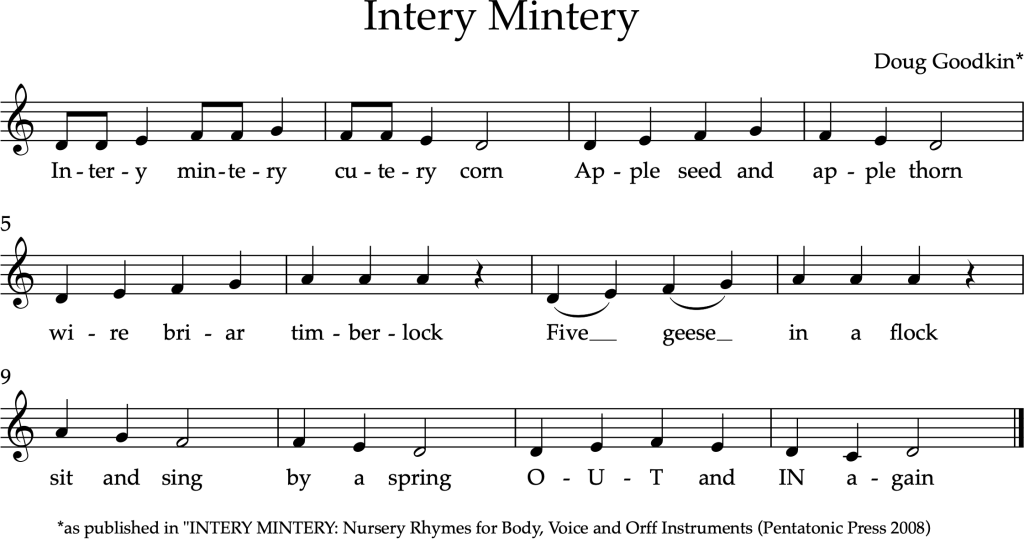
Each year, the fifth grade has the role of playing the song as a recorder consort, featuring voices of recorders from bass to sopranino. This year, before getting right to learning fingerings and practicing articulation, we took two classes to explore some of the mathematical mysteries of intervals using a combination of high tech (video editing) and low tech (physical measurement of instruments).
The first mystery: The Octave
Using iMovie, I recorded the kids singing the song with piano accompaniment in the original key of D minor:
Next, I used iMovie to increase the speed of the clip to 200% (without preserving pitch) and played it back to them (if you don’t know how to do this, here’s one youtube tutorial). They loved hearing themselves sounding like chipmunks…
But…serious question…what is the pitch relationship of the 200% to the 100%? Is the song in the same key? Eventually one student proposed “It’s an octave higher.”
Next question: What will the pitch be like at 50% (twice as slow)? Hypothesis: “An octave lower”
Now the students sounded like a sinister choir of tenors and baritones! And, yes, the hypothesis about the octave lower was confirmed…
The second mystery: The 5th
Now that we had shown that 200% raised the pitch one octave (and 50% lowered the pitch one octave), I asked the students to predict:
If 200% speed gets us an octave above, what percentage speed will we need to make the pitch of the playback a perfect 5th above?
I first asked each student to write some hypotheses about the percent needed to reach a 5th above, and also to request some % speeds (slow or fast) that they would be interested in hearing during the next class.
Low Tech MEasurements
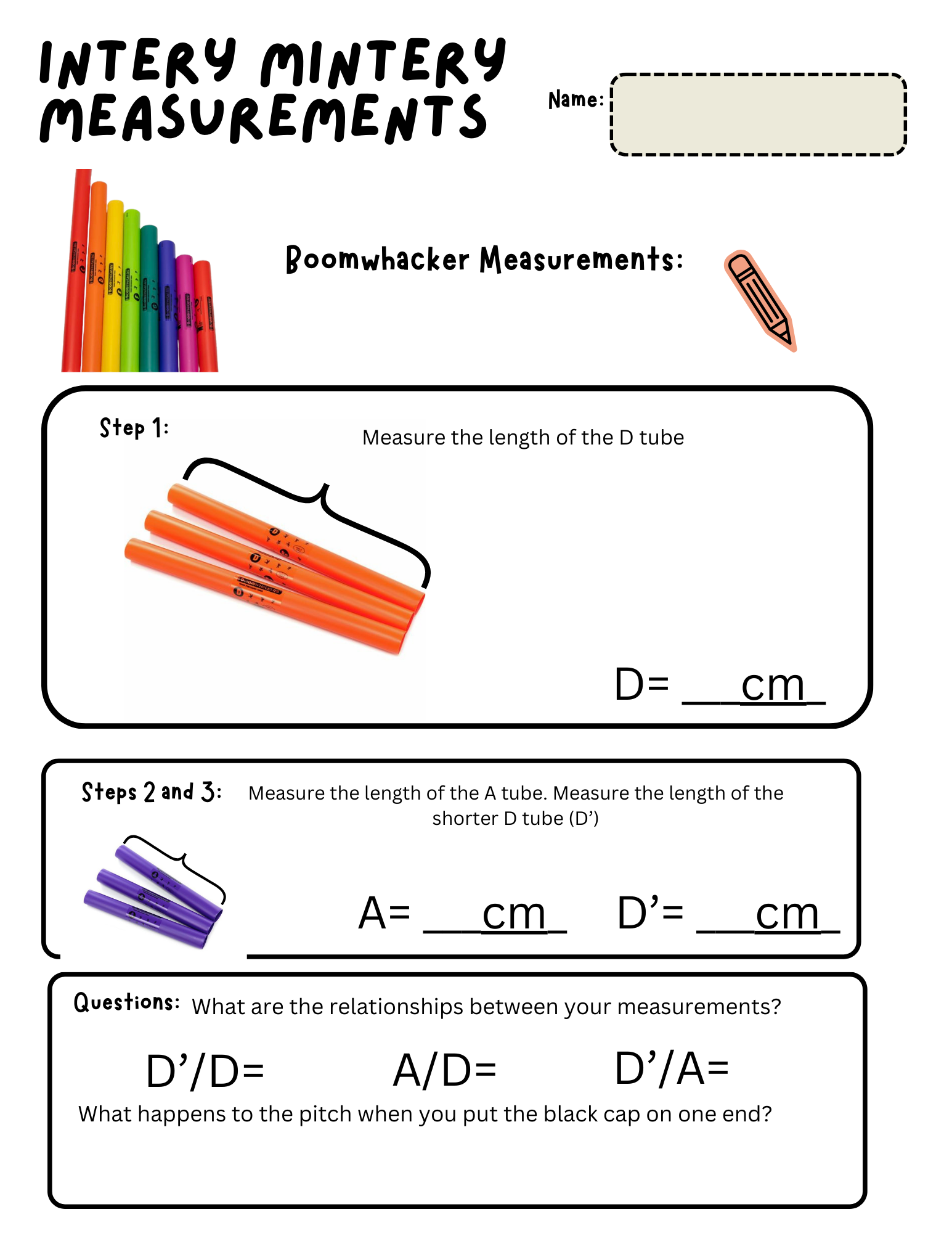
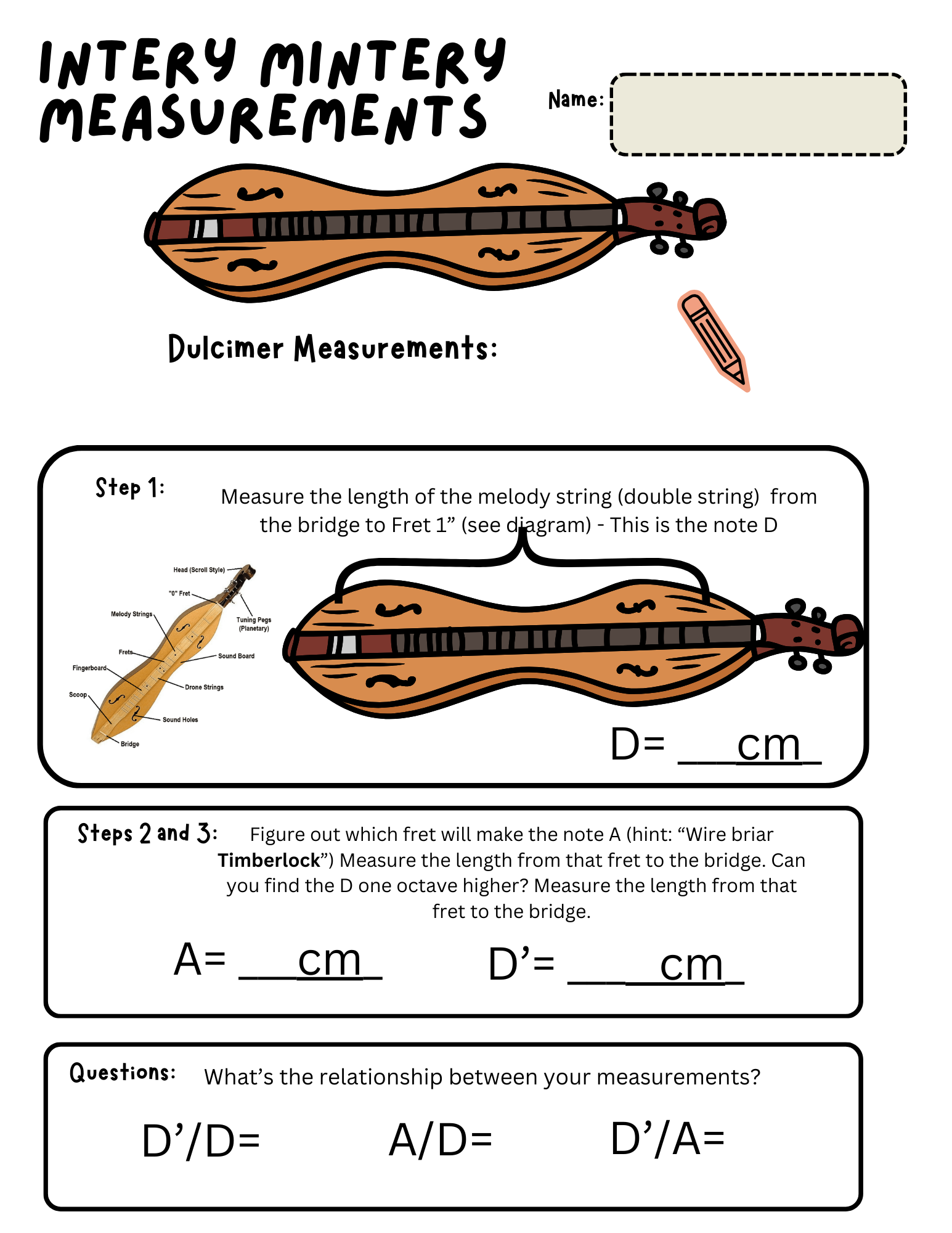
Meanwhile, students were given physical measurement tasks to collect data about the interval of a fifth. Each student was randomly assigned one of four measurements:
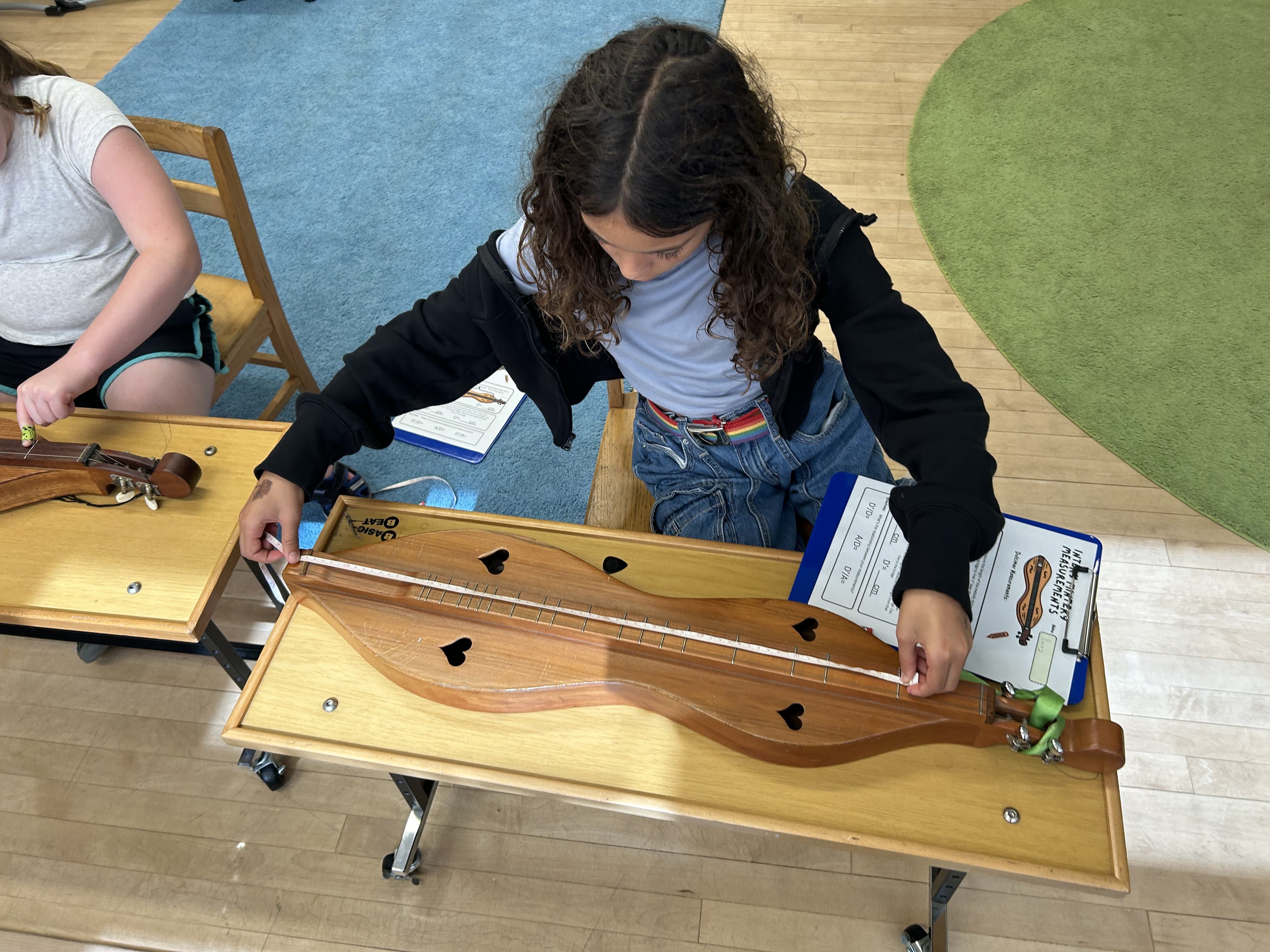
- Dulcimers: Measure the length of the string from the D fret to the bridge and the length of the string from the A fret to the bridge (we had two slightly different sized dulcimers to measure)
- Boomwhackers (tuned plastic tubes): measure the length of the D tube and the length of the A tube.
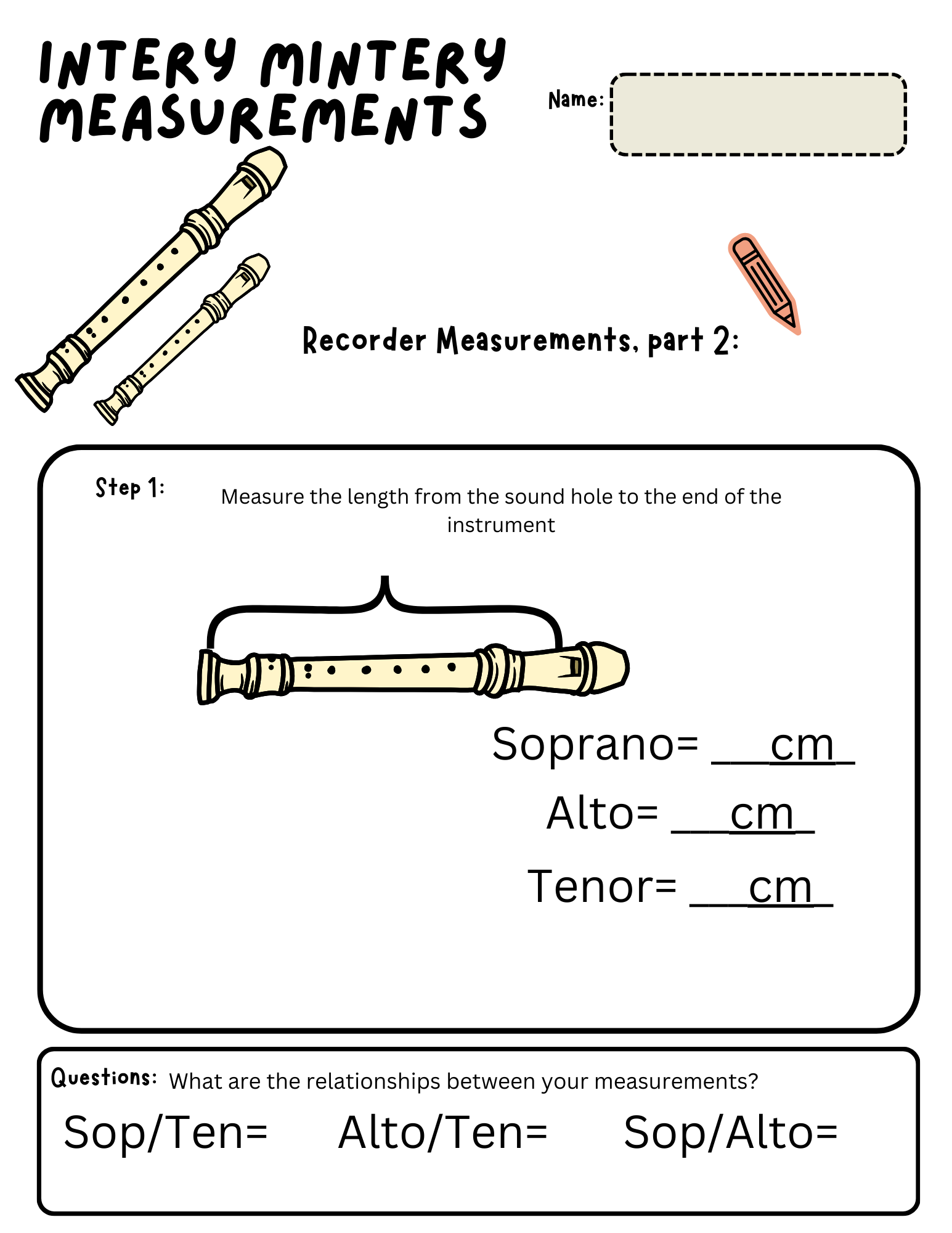
- Recorder (task 1): Compare the length of the alto to the length of the soprano
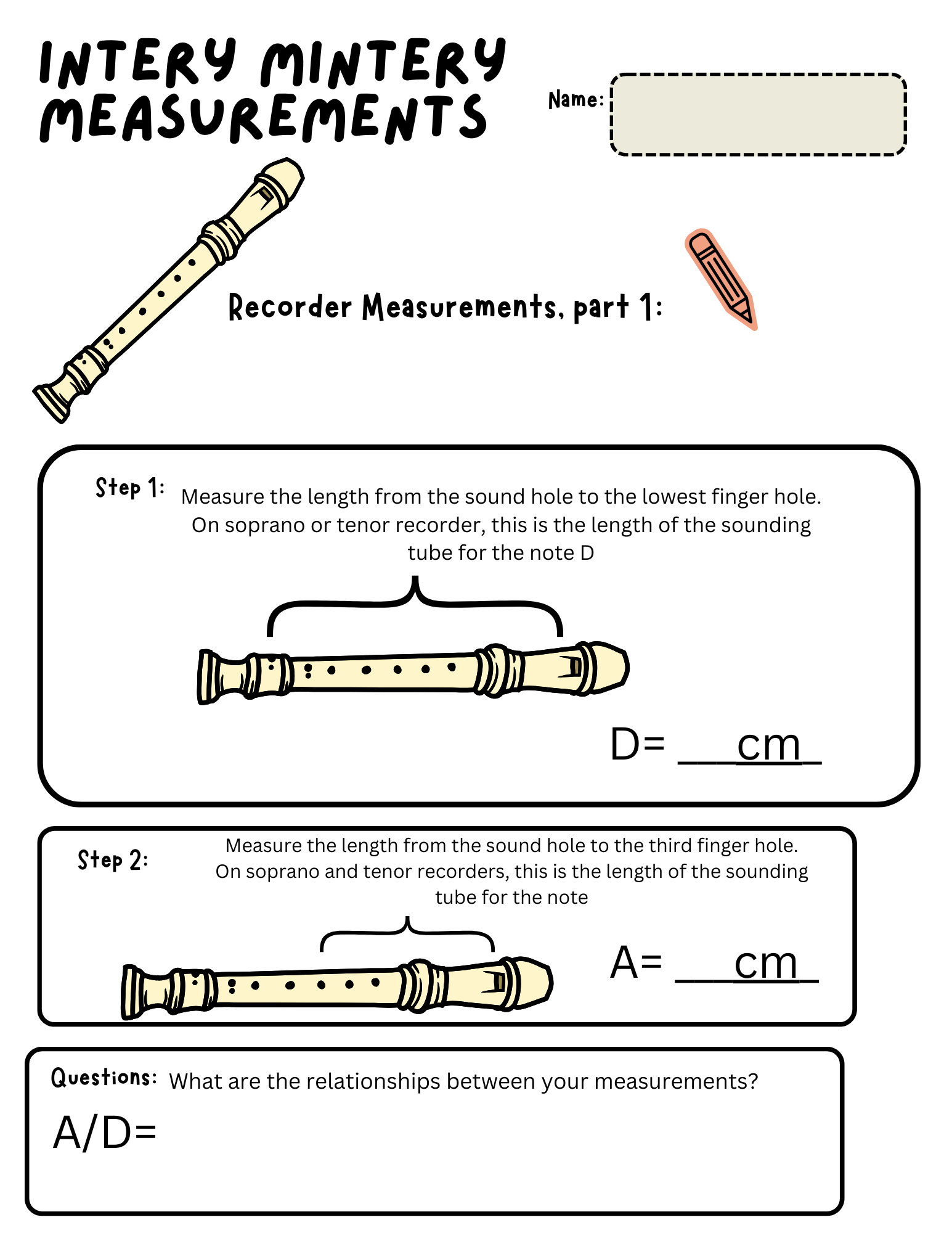
- Recorder (task 2); Compare the length of the sounding tube for the low D and A fingerings (from the open hole below the fingered notes to the sound hole) on the tenor recorder.
Presenting the data
Before our next class, I prepared the data from the physical measurements of the instruments. My goal was to allow the students to draw conclusions about the patterns shown. My data table showed the actual measurements in centimeters and the ratios, expressed in % (to help connect with the video speed experiments).
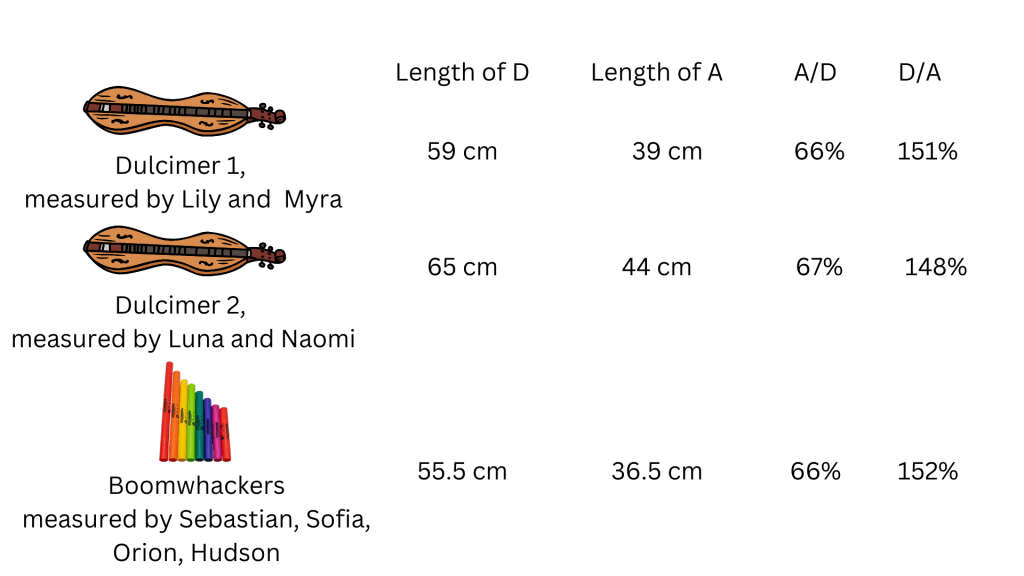
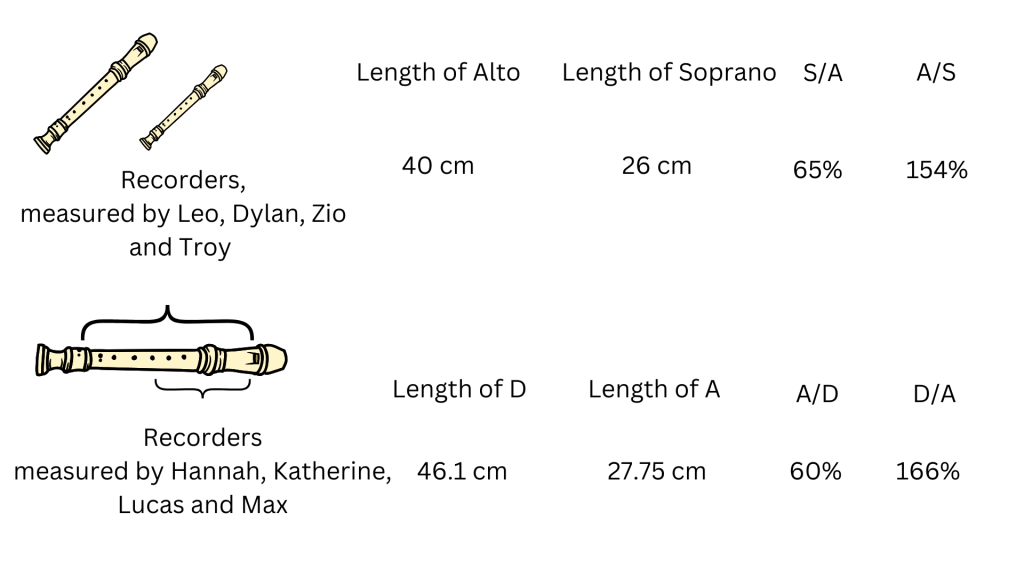
My colleague Damon, the 4th and 5th grade math specialist teacher, came to visit the music class for the moment of the data presentation. The students observed that the actual length of a D varied by almost 20 cm, from Alto recorder 46.1 cm to 65 cm on the larger dulcimer. Similarly, the actual length of an A varied from 27.75 cm to 44 cm. The ratios, however, showed much greater consistency, with A/D coming in at 65-67% and D/A coming in at 148-154 %. The outlier measurements were the recorder “sounding tube” lengths.
To relate these ratios back to our recording project, I had prepared a slide with links to many different speed versions of their performance, based on their hypotheses and requests (if you click on the image below you can access the various speed recordings yourself):
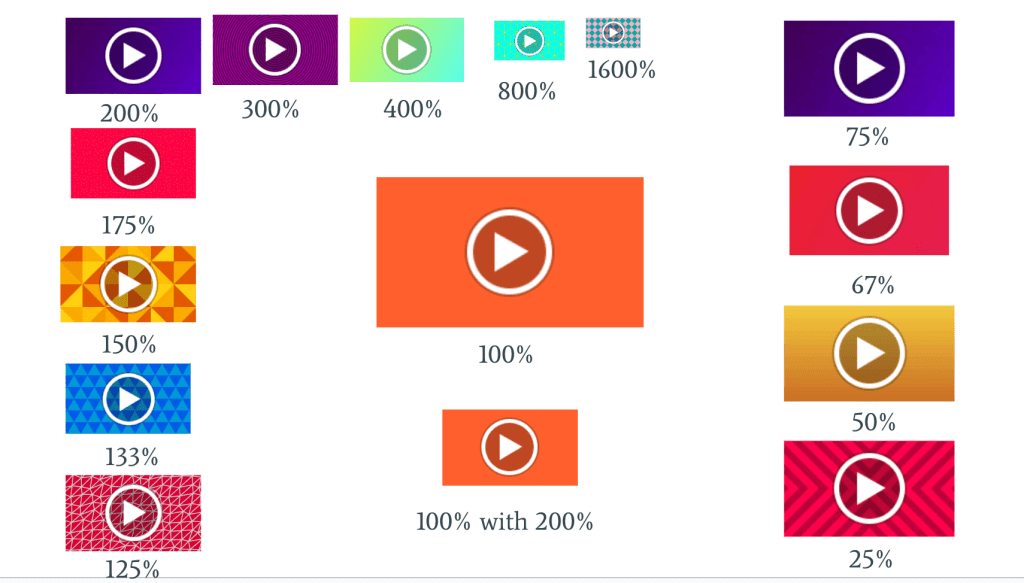
I asked students to request various speeds of playback from the slide based on what we had just observed about the ratios.
We started with 67%, one of the numbers that had emerged from our measurements:
Going to the piano to find the key…G minor! One 5th below the key of D we performed the original song in.
Next…150%, the other number that had emerged from our measurements:
A fifth above! The key of A minor! We got it!
Romping through ratios
I was pleased that the students were eager to listen to the other speeds that they had requested and think about the relationships implied. Some questions I posed before I played particular speeds:
If the 150% speed version turned up as A minor, can you predict the key of 300% ?
If the 67% speed version turned up as G minor, what will the speed be of an octave above (also G minor)?
I was pleased that students had asked for speeds that showed their thinking about the octave, like 400%, 800% and 1600%. They were delighted to hear the mosquito-like sound of 1600% buzzing in they key of D…
I couldn’t help but edit together a combination of 100% and 200% to show the compositional device of a diminution canon (where one group sings the song twice as fast as the other group)
Back to Tempo
I was excited to read one student’s request to try to perform the song at a slow speed so that when we sped up the audio it would sound “normal.”
This led me to the next challenge question:
If our normal performance speed is 100 beats/minute (metronome speed), what tempo would we need to perform in so that when we sped up the performance by 150% it would be one fifth higher but the same tempo as our original performance?
This was relevant for the kids, since, in actual practice, the recorder consort that performs “Intery Mintery” plays the song in parallel fifths:
As of this writing, I haven’t presented this challenge question to the students, but it’s a good one to think about…
Conclusions
I had a great time doing this exploration with the students. I am pleased with several decisions I made along the way:
- I resisted the urge to look up the “answers” before the kids made their measurements. I knew that there were ratios that expressed musical intervals, especially perfect fifths and fourths , but I didn’t look them up. I was excited to see the numbers emerge from the data the students collected.
- I found effective ways of delivering the data to the students. I especially liked the table showing the measurements for D and A and the ratios, expressed in %
- Asking students to estimate the % speed needed to attain a 5th before they did their measurements built anticipation and curiosity, and asking them to request other speeds they would like to hear was another way of engaging their thinking.
- Creating many % speed versions and having them all available on a single google slide made for a fun reveal, where students could make requests.
- Using a recording of the students’ own voices as the main audio material attracted their attention- they liked hearing themselves!
What would I do differently?
- Stick to the boomwhacker and dulcimer measurements, and clarify the measurements of the recorders.
- Revise my data collection sheets and ask less of them in the first class (i.e. don’t ask the students to calculate, just measure).
- Find a way to show the relationship between sound waves (frequency) and the physical length of a vibrating string or an air column
- Consider having the students learn how to manipulate audio and video speeds in iMovie themselves (could be an incentive to record themselves performing the piece)

James Harding teaches music to students ages 3 through 14 at the San Francisco School. He also trains other teachers in Orff Schulwerk, an approach to music and movement education emphasizing creativity. He is the author of “From Wibbleton to Wobbleton” (Penatonic Press 2013) a collection of music and movement lesson ideas for teachers with the theme of creative play.
 James Harding's Blog
Leave a comment